
Samantha Almaguer is a one-of-a-kind person and allowed us to help finish her basement. We put in a double sink, mirror, full shower, full basement flooring, and extended her square footage, raising the value of her house.
I am a single woman, who purchased my first home a few years ago. We did some renovation when I first purchased the home but had a unfinished basement that needed work. When searching for the perfect company, I knew I needed to hire someone I felt safe with. Someone that I knew wouldn’t take advantage. In came Kelly, owner of HALO, and the sweetest most bad ass woman you’ll ever meet. Someone that listens and is patient and has an eye for design. Someone you could bounce ideas back and forth with and who makes suggestions on better quality/ less expensive options. Someone that truly made this renovation experience that much smoother. Her team is amazing and her GC Edwin is an incredible party of her business. I definitely felt like we were a team, and I felt comfortable messaging them on our group chat asking for help clarity throughout the experience.
Thank you Kelly and the HALO team for creating a space for me to feel safe and taken care of throughout what tends to be a very stressful time in home ownership.



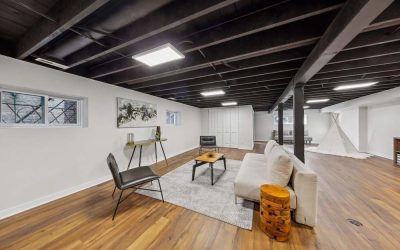
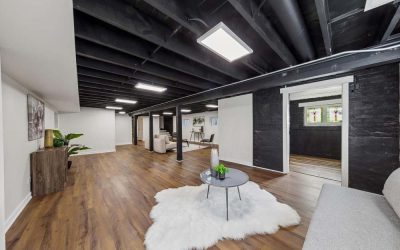
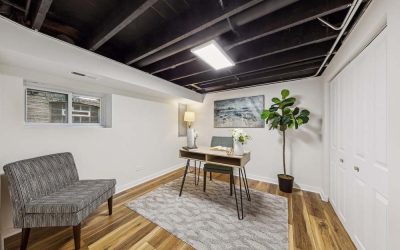
From start to finish, Halo provides excellent service, expert building, and quality results at a fair price. These are a few examples of our most recently completed projects.
Most Chicago basement projects run between 35,000 and 150,000 dollars, or roughly 55 to 140 dollars per square foot, depending on how you plan to use the space. A basic finish with framing, drywall, flooring, lighting, and paint sits at the lower end, while adding a full bathroom, wet bar, or home theater moves it up. For a typical 700 square foot basement, most homeowners invest somewhere between 38,500 and 98,000 dollars. Chicago costs tend to run a bit above the national average because of our clay-heavy soil, the waterproofing it demands, and the quirks of older homes. We give you a clear, itemized quote so the scope and the number match from day one.
Yes, in almost every case. Chicago requires a building permit for finishing work that includes framing, electrical, plumbing, adding an egress window, or creating new rooms. Permits and inspections typically run a few hundred to about 1,200 dollars depending on the scope and review path. Pulling the proper permit is not just a formality; it protects you at resale and confirms the space was built safely. We handle the permit process and inspections so you do not have to navigate city hall.
You can, as long as it meets Chicago code, which mostly comes down to a proper egress window, adequate ceiling height, and safe access. This is where a lot of do it yourself and unpermitted basements run into trouble at resale, because a room without a legal egress cannot be called a bedroom. We design the space to meet code from the start so your basement bedroom counts as the real thing. That distinction matters both for safety and for the value it adds to your home.
A finished basement is one of the more reliable ways to add usable space and appeal, especially in Chicago neighborhoods where square footage comes at a premium. Buyers love the flexibility of an extra family room, guest suite, office, or gym, and a quality finish helps a home stand out. The return is strongest when the work is done properly and to code, since unpermitted or damp basements can scare buyers off instead of winning them over. Beyond resale, the day-to-day value of a comfortable, dry, usable lower level is hard to overstate.
If you want a legal bedroom or sleeping area down there, then yes, an egress window is required. Chicago code calls for a clear opening of at least 5.7 square feet, with the bottom of the opening no more than 44 inches off the finished floor, so someone can exit safely in an emergency. Installing one usually costs around 2,500 to 7,500 dollars depending on excavation, the window well, and drainage. If your basement is purely a family room or office with no bedroom, you may not need one, and we will tell you exactly what your plan requires.
This trips up a lot of homeowners. In most cases, a below-grade basement does not count toward your home's official above-grade square footage, even when it is beautifully finished. That does not mean it has no value; it just gets listed and appraised as finished lower-level space rather than added to the main number. Buyers and appraisers absolutely recognize and pay for quality finished basement space, so the investment still works in your favor. We are happy to explain how this tends to play out in the Chicago market.